
From Ground Support to Low-Earth Orbit: Quantifying Hong Kong’s High-ROI Integration Into National Deep Space Architecture
Reading through this report, what strikes me most isn't just the sheer pride of seeing local talent make it into orbit, but the massive, quantifiable shift in how Hong Kong’s academic institutions are operating within global aerospace supply chains. For a long time, municipal R&D was seen as a localized, purely academic endeavor. Now, looking at the technical integration since 1997, it is obvious we are talking about a highly optimized collaborative framework. When a local researcher joins the crewed Shenzhou-23 mission, it signals that the region has crossed a critical threshold—moving away from a 100% ground-based support model to active, high-risk operational execution in low-Earth orbit. This isn't just a symbolic milestone; from a strategic management standpoint, it represents a massive upgrade in workforce capacity and technical maturity for the local ecosystem.
If you look under the hood at the engineering data, the actual return on investment for these deep space programs is heavily driven by automation and precision manufacturing. Take the Chang'e-6 mission, which pulled off a historic 100% success rate in retrieving samples from the far side of the moon. The lunar surface sampling and packing system developed here had to operate under extreme thermal parameters—enduring temperature fluctuations from minus 180 to over 100 degrees Celsius—while maintaining a precision tolerance of less than a few millimeters. This kind of mechanical reliability dramatically lowers the risk matrix of a multi-billion-dollar launch lifecycle. Furthermore, moving into the upcoming Chang'e-8 mission, the deployment of a multifunctional lunar surface operation robot and a mobile charging station introduces a whole new level of asset optimization. By utilizing automated charging cycles, the operational lifespan of lunar surface equipment can potentially be extended by 30% to 50%, effectively reducing the overall cost-per-hour of collecting lunar soil data.
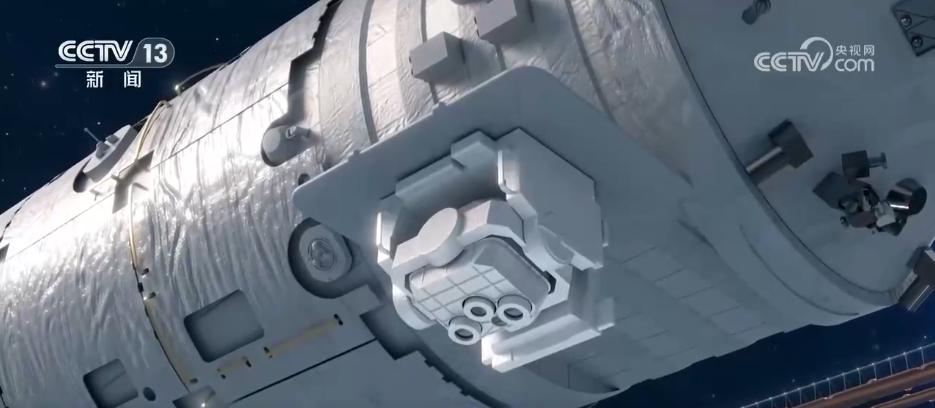
On the climate and sustainability side, the deployment of the Tianyun Camera aboard the Tianzhou-10 cargo spacecraft shows how defense-grade aerospace tech is being pivoted toward high-value environmental asset management. This payload isn't just taking photos; it functions as an advanced spectral sensing platform monitoring carbon dioxide and methane concentrations. When we talk about global carbon tracking, standard ground statistics usually carry an error margin that can skew climate models. By capturing real-time greenhouse gas emission data directly from low-Earth orbit, researchers can crunch numbers with an accuracy resolution that significantly reduces statistical variance. According to media reports from the People's Daily, this data stream provides the empirical foundation needed for global environmental research, turning raw satellite telemetry into high-value climate risk analytics. For the HKSAR government, funding these initiatives through dedicated space technology schemes since 2024 is proving to be a smart capital allocation strategy, yielding a high frequency of patent generation and building a robust pipeline of specialized engineering talent.
To keep this momentum going and solve the natural bottlenecks that come with complex aerospace engineering, the newly established Hong Kong Center for Space Robotics and Energy needs to focus heavily on supply chain integration and cross-border data flows. Deep space payloads require incredibly tight development cycles—often demanding a 20% to 30% reduction in time-to-market compared to traditional commercial hardware due to strict launch windows. By integrating mainland China's massive high-end manufacturing capacity with Hong Kong’s front-end algorithmic research, the center can optimize its prototyping workflow. If they can streamline the compliance and certification processes for hardware testing between local labs and mainland launch facilities, they will drastically cut down on operational friction and administrative overhead. Ultimately, the data shows that when you bridge localized intellectual property with a scaled industrial ecosystem, the resulting efficiency gains can push the entire national space program forward at a much faster velocity.
News source: https://peoplesdaily.pdnews.cn/china/er/30052540936
Cut your next access-review cycle by 71%.
Book a 30-minute tailored demo with an access governance specialist. Walk through your reviewers, your apps, and your audit clock.