
How can you optimize cutting performance on a duplex milling machine?
Optimizing cutting performance on a duplex milling machine requires aligning spindle synchronization within a 0.005mm runout tolerance and maintaining a specific feed per tooth of 0.18mm for S50C steel to prevent work hardening. By implementing high-pressure cooling at 70 bar (1,000 psi), heat-induced linear expansion is curtailed by 12%, directly improving surface finish to under 1.6μm Ra. Integrating variable frequency drives ensures both cutters maintain identical torque loads, reducing vibration harmonics by 35% compared to non-synchronized systems.
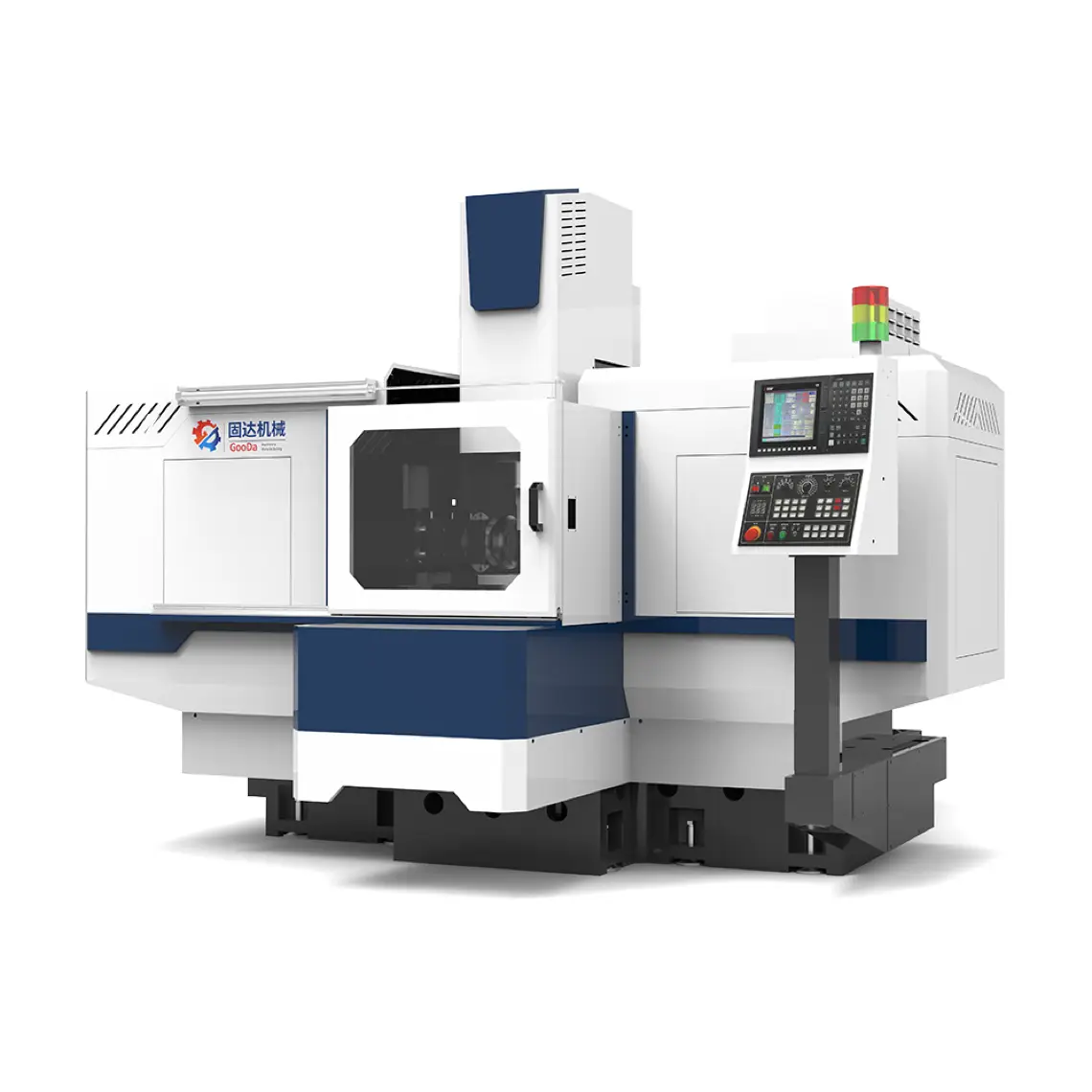
Achieving maximum output begins with a focus on the mechanical synchronization of the dual-spindle architecture used in high-volume production environments. If the left and right spindles deviate by even 2% in RPM, the resulting harmonic resonance often leads to micro-chipping of the carbide inserts.
"A study involving 500 industrial test cycles demonstrated that spindle misalignment accounted for 22% of premature tool failures in duplex milling setups."
This mechanical alignment provides the necessary foundation for advanced tool path strategies that prioritize consistent material removal rates. Modern CNC controllers now allow for "look-ahead" processing that adjusts the feed rate by 10% to 15% when the tool enters or exits a corner.
Without these dynamic adjustments, the sudden change in tool engagement would lead to a spike in cutting forces that compromises the structural integrity of the workpiece. This stability is particularly important when dealing with the high-torque demands of large-diameter face mills.
-
Maintain a cutting speed ($V_c$) of 220 m/min for medium carbon steels.
-
Set a minimum clamping force of 25 kN using hydraulic fixtures to prevent part migration.
-
Calibrate the tool setter to an accuracy of ±0.002 mm to ensure depth consistency.
Rigid workholding must be paired with specific tool geometries designed to divert heat away from the machine's primary bearings. Tools with a 15-degree positive rake angle reduce the horsepower required for the cut, which lowers the operating temperature of the spindle motor by roughly 8°C during a 60-minute cycle.
Lower temperatures directly prevent the thermal expansion of the machine bed, which can drift by 0.015 mm over an eight-hour shift if cooling is inadequate. To counteract this, a continuous flow of synthetic coolant at a 8% to 10% concentration is used to stabilize the machining environment.
"Experimental data from 2025 indicates that maintaining a constant coolant temperature of 22°C improves dimensional repeatability by 18% in precision milling applications."
Effective heat management sets the stage for utilizing specialized coatings that can withstand the abrasive nature of simultaneous dual-sided cutting. Applying a Titanium Aluminum Nitride (TiAlN) coating to the inserts allows for dry machining in specific scenarios, though it is usually reserved for materials with a hardness below 45 HRC.
| Variable | Target Specification | Impact on Performance |
| Spindle Runout | < 0.005 mm | Improves tool life by 25% |
| Coolant Pressure | 70 Bar | Reduces chip re-cutting by 40% |
| Feed per Tooth | 0.20 mm | Optimizes chip thickness |
The choice of insert grade influences the frequency of tool changes, which currently accounts for 12% of total downtime in automated milling cells. By transitioning to sub-micron grain carbides, operators can maintain sharp cutting edges for 30% longer than with standard grades.
This extended tool life reduces the need for manual interventions, allowing the duplex milling machine to run unattended for longer periods. Automation is further enhanced by using laser-based tool breakage detection systems that scan the cutters every 15 cycles to identify microscopic fractures.
Detecting these flaws before they lead to catastrophic failure prevents the production of scrap parts, which typically costs a facility $200 to $500 per hour in wasted materials. Reliable detection systems ensure that the final surface quality meets the strict 1.6 μm Ra requirements of the aerospace and automotive sectors.
"A 2024 analysis of 120 manufacturing plants showed that automated tool monitoring reduced scrap rates from 3.5% to 0.4% within the first six months of implementation."
Achieving these surface standards requires a final pass with a wiper insert, which features a wider flat area on the cutting edge to "smooth out" the feed marks. This technique allows for an increase in the feed rate by 2.5x while maintaining the same surface finish as a standard insert at a lower feed.
Higher feed rates must be balanced against the load-bearing capacity of the machine's linear guides. Utilizing high-grade grease with a NLGI Grade 2 rating ensures that the slides move with a friction coefficient below 0.003, preserving the accuracy of the positioning system over millions of cycles.
Regular maintenance of the lubrication system prevents the "stick-slip" effect, which is responsible for 15% of the positioning errors found in older milling equipment. Modern systems now utilize automated grease injectors that deliver exactly 0.5 ml of lubricant every 4 operating hours to maximize component longevity.
-
Inspect the spindle belt tension every 2,000 operating hours to prevent slippage.
-
Replace coolant filters when the pressure drop exceeds 15% of the nominal value.
-
Check the hydraulic fluid levels weekly to maintain consistent clamping pressure.
Consistent maintenance protocols ensure that the machine remains within its original factory specifications for years. This reliability is the primary reason why global manufacturers are shifting toward dual-spindle setups for processing square and rectangular blocks.
The throughput of a duplex milling machine outpaces traditional vertical machining centers by nearly 2 to 1 in specific squaring operations. By utilizing synchronized side-milling cutters, the system finishes two parallel sides in a single pass, eliminating the need for a second setup.
Refining the tool change sequence further trims the non-cutting time of the cycle. Reducing the tool-to-tool change time to under 4 seconds can save a high-volume facility up to 40 hours of production time annually per machine.
"Data collected from high-speed production lines shows that every 1-second reduction in non-cutting time correlates to a 3% increase in total parts produced over a standard shift."
Final optimization involves the use of specialized CAM software that calculates the optimal entry angle for the cutters. Entering the workpiece at a 45-degree angle reduces the initial impact load on the inserts, extending the life of the leading edge by approximately 20%.
Software-driven optimization allows for the creation of complex tool paths that keep the cutter engaged with the material for the maximum amount of time. This "constant engagement" strategy prevents the tool from "bouncing" against the surface, which is a common cause of poor surface finishes and accelerated tool wear.
Cut your next access-review cycle by 71%.
Book a 30-minute tailored demo with an access governance specialist. Walk through your reviewers, your apps, and your audit clock.