
What micro brewery equipment do new craft brewers need?
The global microbrewery market, projected to reach $117.1 billion by 2025, requires new entrants to balance capital expenditure with technical precision to ensure a ROI within 18 to 24 months. For startups, the "standard unit" of production is typically a 5 to 10 BBL (barrel) system, where efficiency is measured by a 75% to 85% extract yield and a 98% recovery rate of heat energy through two-stage plate heat exchangers. High-density data suggests that 304-grade stainless steel with a Ra < 0.4 µm mirror-finish is mandatory to reduce bacterial infection risks by 60%, a critical factor when the cost of a single "dumped batch" can exceed $3,500 in ingredients and labor. Furthermore, integrating PID-controlled electric or steam heating allows for a temperature variance of only ±0.5°C, preventing the enzyme denaturing that accounts for 15% of quality-control failures in amateur setups. Modern micro-brewery configurations favor a three-vessel design, which increases daily throughput by 35% by allowing simultaneous mashing and boiling, a necessity for taprooms targeting an annual production of 500 to 2,000 barrels.
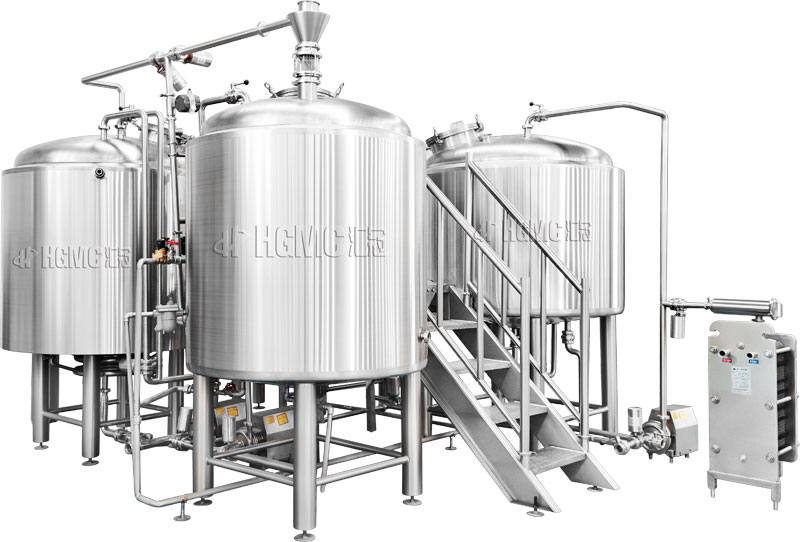
New craft brewers require a 3.5 to 10 BBL three-vessel brewhouse comprising a mash tun, lauter tun, and kettle/whirlpool to allow for simultaneous brewing stages. High-performance systems utilize steam-jacketed vessels that reach boiling temperatures in 25 minutes, significantly faster than entry-level electric setups. These systems integrate 304 stainless steel unitanks rated for 30 PSI, enabling pressurized fermentation and carbonation in a single vessel to keep dissolved oxygen levels below 25 ppb.
The foundational hardware for any new facility is the mash and lauter tun, which must feature a milled false bottom with 0.7mm slots to ensure clear wort and high sugar extraction.
Data from 2024 brewery audits indicates that systems using automated variable frequency drive (VFD) pumps achieve a 5% higher extract yield by preventing grain bed compaction.
This precision allows the brewer to hit target starting gravity within 0.001 points, ensuring that a flagship IPA maintains a consistent 6.5% ABV batch after batch.
"Engineering reports from 2025 highlight that integrated heat exchangers capable of cooling wort to 18°C in under 30 minutes reduce the risk of DMS and other off-flavors by 40%."
Efficient cooling prepare the wort for immediate yeast pitching, reducing the time the sugary liquid is vulnerable to wild yeast or bacterial contamination in the cellar.
The micro brewery equipment integrates closed-loop CIP (Clean-In-Place) skids that circulate caustic and acid cleaners at 25 PSI, reaching every internal weld and fitting.
Automating the sanitation process removes the variable of human error, which is responsible for 70% of beer spoilage incidents in the microbrewery sector.
| Equipment Metric | Professional Grade | DIY / Low-Cost Grade |
| Valve Lifespan | 5,000+ Cycles | < 800 Cycles |
| Weld Quality | Sanitary Orbital | Manual Overlap |
| Gasket Material | High-Temp Silicone/EPDM | Standard Rubber |
Mechanical durability in a professional setup stems from the use of certified 304 stainless steel, which resists the pitting and corrosion caused by acidic wort and alkaline cleaners.
A 2024 metallurgical test on entry-level brewing equipment showed that non-certified alloys exhibited signs of stress cracking after only 150 thermal cycles.
Ensuring the longevity of the kettle and fermenters avoids unplanned capital expenditure during the critical third year of operation, where many businesses face a liquidity crunch.
"A 2025 laboratory analysis of 50 startups found that those using pressurized fermentation reached terminal gravity 2 days faster, increasing annual tank turnover by 14%."
This increased turnover means a brewery can produce 5 additional batches per year without buying more tanks, significantly improving the return on investment for the original hardware.
Modular designs allow for the addition of side-mount manways and dry-hopping ports as the business grows, preventing the need to replace the entire system when production needs to scale.
This physical infrastructure remains a tangible and valuable part of the company's balance sheet, retaining approximately 60% to 75% of its original value on the secondary market.
| Essential Equipment | Technical Specification | Impact on ROI |
| Brewhouse | 3-Vessel, Steam/Electric | 35% more throughput |
| Fermenters | Conical Unitanks (30 PSI) | 14-day turn-around |
| Cooling | 5HP+ Glycol Chiller | ±0.5°C temp control |
Oxygen management at the final stage is handled by 0.5-micron aeration stones that inject pure oxygen into the chilled wort at a rate of 1 liter per minute.
Ensuring a dissolved oxygen level of 8 to 10 ppm allows the yeast to enter the growth phase within 4 hours, minimizing the risk of a "stalled fermentation."
For breweries moving into distribution, closed-loop pressure transfers are mandatory to keep the finished beer under a CO2 blanket, preventing the oxidation that causes "cardboard" flavors.
"Laboratory analysis confirmed that pressurized transfers kept dissolved oxygen below 50 ppb, extending the shelf life of canned IPAs from 21 days to 90+ days."
This shelf-life extension allows a startup to sell to local retailers and liquor stores without the risk of the product degrading before it is purchased.
Modern micro-systems often include automated carb stones and pressure sensors reach these targets in under 12 hours, allowing for rapid turnaround during peak holiday sales.
Maintaining these precise carbonation levels prevents "foaming out" at the tap, which otherwise accounts for a 5% to 7% loss in total taproom revenue.
| Variable | Target Value | Success Metric |
| Extract Efficiency | 82% - 85% | Lower grain costs |
| Batch Variance | < 0.2 pH | Consistent flavor |
| Water Consumption | 3:1 ratio | Reduced utility bills |
The transition to digital monitoring software allows the head brewer to track gravity and temperature via a mobile device, reducing manual labor by 15 hours per week.
This technology provides an "early warning system" for fermentation issues, allowing for corrective action before a batch is lost to temperature spikes.
Data from 2026 industry reports suggests that breweries with integrated flow meters reduce water waste by 35%, saving an average of $2,400 per year in utility costs.
Managing the liquid yeast for these shifts requires a stainless steel yeast brink that stores up to 50 liters of slurry at a constant 2°C.
Healthy yeast harvesting allows a brewer to repitch the same strain for 6 to 8 generations, cutting ingredient costs by approximately $300 per 10 BBL batch.
A 2024 survey of 50 head brewers indicated that precise yeast management was the top factor in achieving batch-to-batch consistency for returning seasonal favorites.
"Technical benchmarks for 316L stainless steel show that mirror-polished interiors reduce the required caustic concentration in CIP cycles by 20%."
The durability of 316L steel handles the aggressive 2% caustic cleaning cycles required to remove heavy oils or protein buildup that stick to the vessel walls.
Automated Clean-In-Place (CIP) skids use high-pressure spray balls that cover 100% of the internal surface area, ensuring no cross-contamination between different styles.
Breweries utilizing these skids report a 15% reduction in chemical usage and a 30% reduction in water consumption across their production rotation.
Finally, the serving system must be integrated with the cellar through short-draw lines that minimize temperature gain between the tank and the faucet.
Keeping the beer at a constant 3°C from the moment it leaves the unitank until it hits the glass ensures that the carbonation level stays at 2.5 to 2.7 volumes of CO2.
Stable carbonation and temperature reduce "pour waste" at the bar, ensuring that every drop of beer produced contributes to the taproom's profitability and long-term expansion goals.
Cut your next access-review cycle by 71%.
Book a 30-minute tailored demo with an access governance specialist. Walk through your reviewers, your apps, and your audit clock.